Wondering if condo living in La Crosse will simplify your life or complicate your budget? That is a smart question to ask before your next move. If you are weighing convenience, monthly costs, parking, and location, the right answer depends on how you want to live day to day. Let’s break down what condo ownership really looks like in La Crosse so you can decide with confidence.
La Crosse condo living at a glance
La Crosse condo options are more varied than many buyers expect. Current market snapshots show 12 condos for sale in La Crosse, with a median listing price of $265,000. For comparison, the broader La Crosse housing market had a median sale price of $257,500 in March 2026.
That tells you something important right away. A condo is not always the “cheap” option. In La Crosse, the decision often comes down less to sticker price and more to lifestyle, maintenance, and what you get for your monthly carrying costs.
What types of condos you will find
La Crosse has more than one condo style. Recent listings include downtown and riverfront buildings, newer southside units, and larger ranch-style or townhouse-style condos in other parts of the city. That gives you a wider range of choices depending on whether you want walkability, views, or a quieter low-maintenance setup.
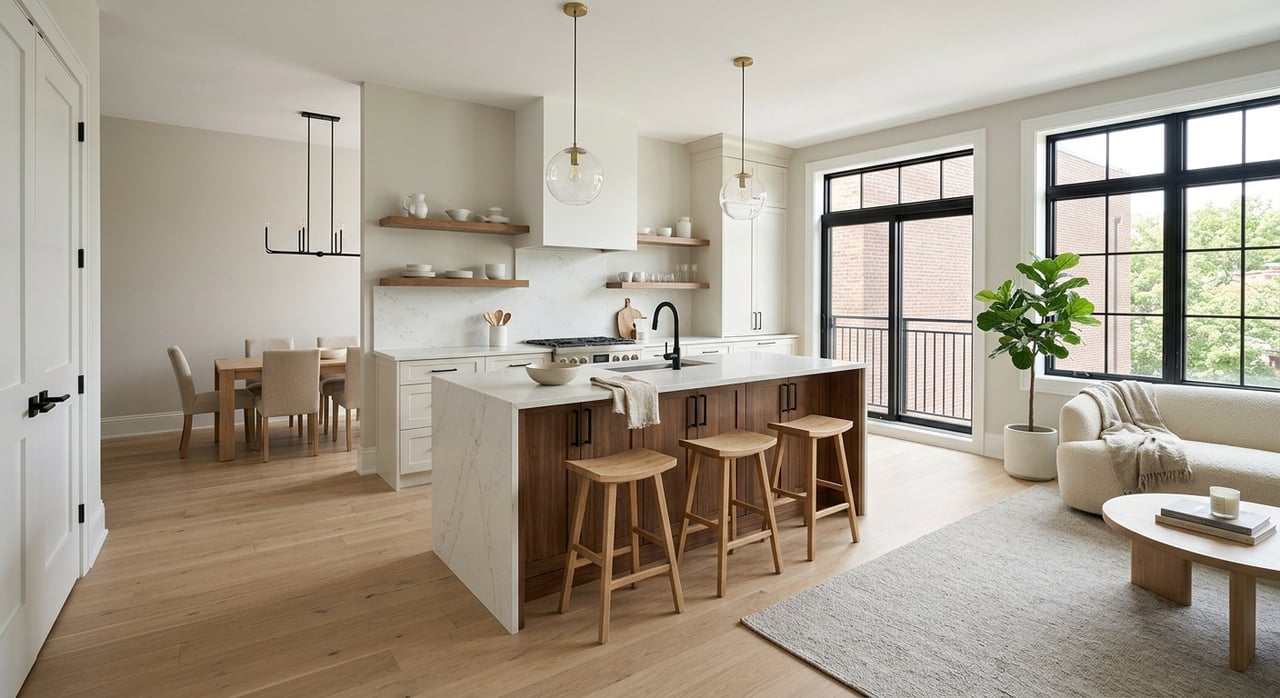
Many current condo examples fall around 1,080 to 1,250 square feet with 2 bedrooms and 2 bathrooms. Common features include open layouts, in-unit laundry, private decks or patios, and attached garages. Larger options are also on the market, including 3-bedroom condos around 2,740 square feet with two-car garages and screened porches.
Amenities can change the experience
Not all condos offer the same lifestyle. Some downtown riverfront buildings include features like heated garages, car-wash bays, fitness centers, community rooms, and deck space with river access. Other buildings may offer elevator service, pet areas, bicycle stations, and outdoor terraces.
On the other hand, some newer southside condos focus more on private entry, a private deck, river views, and simple low-maintenance living. If you picture condo life one way, make sure the building you are considering actually matches that vision. In La Crosse, one condo may feel urban and amenity-rich, while another feels more residential and private.
What condo ownership really costs
The monthly payment is where condo decisions become more real. Beyond your mortgage, taxes, and personal insurance, you also need to account for HOA dues. In recent La Crosse listings, monthly HOA fees ranged from about $150 to $470, with many units falling between $150 and $350.
Those dues are not just an extra bill. In Wisconsin, condo associations govern the property, adopt budgets, and levy assessments for common expenses and reserve funds. In practical terms, dues help pay for things like exterior maintenance, shared spaces, operations, and future repairs.
Some La Crosse associations cover basic services like lawn care, snow removal, and pest control. Others include higher-service amenities such as fitness centers, community rooms, or water-access features. A lower HOA fee may look appealing, but it is still worth asking what is and is not included.
Why reserve funds matter
A condo budget is about more than today’s dues. Wisconsin law requires buyers to receive important association documents before closing, including materials such as the declaration, bylaws, rules, projected annual operating budget, and estimated monthly payments. Many residential condominiums must also provide a statutory reserve account statement.
That reserve information matters because it helps you understand how the association plans for future repairs and replacements of common elements. If you are comparing condos, one of the best questions you can ask is whether the association appears prepared for larger future expenses. This is a key part of your due diligence, not a minor detail.
Insurance works differently with condos
Insurance is another area where condo ownership differs from owning a single-family home. According to the Wisconsin Office of the Commissioner of Insurance, condo owners generally buy an HO-6 policy for the unit itself. The association typically insures the building structure and common property.
You may also want to understand loss-assessment coverage. That can matter if the association assesses owners for a common-property loss that is not fully covered by the association’s policy. Before you buy, it is worth reviewing what the association insures and what you would need to cover personally.
Parking deserves a closer look
In La Crosse, parking can make or break your condo experience, especially downtown. The city offers residential parking permits only to qualifying residents, and a permit does not guarantee a space. Residents in the downtown district are not eligible for residential parking permits.
That is why parking details should never be assumed. Some suburban or river-edge condos include one-car or two-car attached garages, while downtown buildings may rely on structured parking or ramp arrangements. Before you commit, confirm whether parking is deeded, assigned, included in dues, or purchased separately.
In winter, that detail can matter even more than you think. A condo with clear, convenient parking can add real day-to-day value.
Walkability depends on the address
Many buyers are drawn to condos because they hope for a more walkable lifestyle. In La Crosse, that can absolutely be part of the appeal, but it depends on the exact building. Citywide, La Crosse has a Walk Score of 54, a Transit Score of 27, and a Bike Score of 66.
Outdoor access is a plus in this market too. Trust for Public Land reports that 89% of residents live within a 10-minute walk of a park, and the city has 54 parks. For buyers who enjoy getting outside, that adds to the appeal of condo living in the area.
Some downtown and riverfront condo listings highlight easy access to Festival Foods, restaurants, shopping, entertainment, the riverwalk, and bike or walking paths. At the same time, not every condo offers a car-light lifestyle. Some southside options still function more like car-dependent homes, so it is wise to judge convenience by location, not by property type alone.
Condo vs. single-family in La Crosse
If you are deciding between a condo and a house, think about your routine more than your assumptions. A condo often fits buyers who want fewer exterior chores, more shared amenities, and a lower-maintenance setup. That can appeal to downsizers, busy professionals, and relocators who want a more turnkey move.
A single-family home often works better if you want more privacy, more storage, yard space, or more control over the property. The trade-off is that exterior care, yard work, and many repair responsibilities usually fall on you. That can mean more flexibility, but also more time, labor, and unpredictable costs.
In La Crosse, current pricing suggests the gap may not be dramatic at first glance. With condos listed around the mid-$200,000s and the broader market’s median sale price at $257,500, the real question is often what you are getting each month for the money. If HOA dues buy you convenience, maintenance relief, parking, and amenities you will actually use, a condo may be a strong fit.
Questions to ask before buying a condo
Before you make an offer on a La Crosse condo, take time to review the details that shape your ownership experience. A good condo choice is not just about the unit. It is also about the association, the rules, and the ongoing monthly structure.
Here are a few smart questions to ask:
- What do the HOA dues cover?
- Are there any current or planned special assessments?
- What do the reserve funds look like?
- What are the building rules and bylaws?
- How is parking handled?
- Is the location truly walkable for your daily routine?
- What insurance will you need in addition to the association policy?
These answers can help you compare properties more clearly and avoid surprises after closing.
When a condo may be the right move
A condo could be the right fit if you want to spend less time on exterior upkeep and more time enjoying La Crosse. It may also make sense if you value shared amenities, prefer a lock-and-leave lifestyle, or want a property that feels more manageable than a stand-alone house.
The best condo choice is one that matches both your budget and your daily habits. If you want help comparing condo options, reviewing trade-offs, and narrowing in on the right part of La Crosse, working with a local team can make the process much easier.
Whether you are relocating, downsizing, or simply exploring a low-maintenance move, Jillian Hugo can help you evaluate La Crosse condos with clear local insight and a strategy tailored to your goals.
FAQs
What is the typical condo price in La Crosse?
- Current Redfin data shows a median condo listing price of $265,000 in La Crosse.
What are typical HOA fees for La Crosse condos?
- Recent La Crosse condo listings show monthly HOA dues ranging from about $150 to $470, with many between $150 and $350.
What should La Crosse condo buyers review before closing?
- Wisconsin buyers should review association documents such as the declaration, bylaws, rules, projected annual budget, estimated monthly payments, reserve information, parking arrangements, and any current or planned assessments.
How does condo insurance work in Wisconsin?
- Wisconsin’s Office of the Commissioner of Insurance says condo owners generally buy an HO-6 policy for the unit, while the association typically insures the building structure and common property.
Are La Crosse condos walkable?
- Some are, especially in downtown and riverfront locations, but walkability varies by address. Citywide, La Crosse has a Walk Score of 54.
Is parking easy with downtown La Crosse condos?
- Parking varies by building, and downtown residents are not eligible for residential parking permits, so buyers should verify whether parking is deeded, assigned, included in dues, or separate.